How to Talk to Protestants
On This Page
Author’s note (2026): I wrote this in 2014 as an evangelical Protestant. I have since crossed the Tiber and joined the Catholic Church. I’ve kept the body of this post in its original first-person voice—the practical advice still holds, perhaps with even more force from someone who has now seen the conversation from both sides—but readers should know the autobiographical framing reflects where I was at the time of writing, not where I am now.
Far more serious still is the division between the Church of Rome and evangelical Protestantism in all its forms. Yet how great is the common heritage which unites the Roman Catholic Church, with its maintenance of the authority of Holy Scripture and with its acceptance of the great early creeds, to devout Protestants today!
— J. Gresham Machen, Christianity and Liberalism (Grand Rapids: Eerdmans, 2009 [1923]), ch. 2.
Catholics and Protestants speak different languages. If Catholics want to learn how to talk to Protestants effectively, they must therefore learn how to speak Protestant.
In these series of articles, I will seek to help Catholics learn how to articulate their Church’s teachings in Protestant terms, and, in doing so, to disarm much of the Protestant objection to Catholic theology.
About Me
I am not Catholic, so my purpose in writing these articles is not to provide a Catholic apology. Rather, I want to help Catholics learn how to talk to Protestants because I have a tremendous respect for the Catholic faith that I hope my Protestant brethren will come to share.
For several years, I seriously considered joining the Catholic Church. While I eventually decided against it—and developed a deeper commitment to my own faith tradition as a result—this time in my life provided me with a greater understanding of Catholicism and the lines that divide us.
In writing these articles, I want to help Catholics understand the Protestant perspective, the nuances of Protestant theology, and the biggest Protestant hang-ups with Catholicism. By learning about Protestant culture, Catholics can learn to communicate their beliefs in a manner that helps Protestants not only understand but also appreciate Catholic thought.
Evangelical Catholicism?
I grew up in a conservative evangelical church setting where Protestants frequently questioned the legitimacy of Catholicism as a Christian faith. Yet, through the course of my theological education at a Southern Baptist university, I acquired a greater appreciation for the ancient churches, particularly the Roman Catholic Church.
As I read Catholic literature—as well as the early church writings on which much of Catholic doctrine is based—I concluded that Protestant animosity generally stems from a lack of understanding of Catholic teaching, including foundational concepts like divine revelation, which is often caused by linguistic differences. Catholics and Protestants often say the same thing in very different ways, and navigating through this fog of semantics is critical to promoting understanding. Learning how to talk to Protestants requires learning Protestant vocabulary.
Hope for Unity
Protestantism arose as a reaction against the abuses of medieval Catholicism, and so much of Protestant theology is couched in reactionary terms. Consequently, the buzzwords against which Protestant theology so violently reacts are part of the Catholic vernacular, even when there is no real disagreement.
Catholics and Protestants share so much common ground—including their views on the inspiration of Scripture—that promoting mutual understanding will go a long way toward what should be the ultimate goal of both Catholics and Protestants: Christian unity. Theological disagreements notwithstanding, any eventual ecclesiastical unity must go through Rome. I tend to believe that a unified Church will act a lot like evangelical Protestantism, sound a lot like Orthodoxy, and look a lot like Catholicism. For a fuller understanding of how these three major Christian traditions compare on doctrine and practice, see my three-way comparison of Orthodox, Catholic, and Protestant theology.
As a Protestant, I am not naïve about the issues hindering the realization of that unity, but I nonetheless look with hope toward a day of eventual reunification. While I believe the Reformation was a necessary reaction against a corrupt and impious church, its necessity was tragic and demonstrated a shortcoming in the Body of Christ we should work together to remedy.
Christ: Our Common Ground
Many matters of faith and practice separate us, but if we are to work toward the unity Christ desired, we must find our common ground. Fortunately, we share in common our faith’s very foundation: Jesus Christ.
Catholics and Protestants too often focus their discussions on peripheral issues—the Virgin Mary, Purgatory, the Pope—discussions which are frequently plagued by ignorance and misunderstanding. Consider, however, the opening of the Catechism of the Catholic Church:
“FATHER,…this is eternal life, that they may know you, the only true God, and Jesus Christ whom you have sent.” (John 17:3)
“God our Saviour desires all men to be saved and to come to the knowledge of the truth.” (1 Timothy 2:3-4)
“There is no other name under heaven given among men by which we must be saved.” (Acts 4:12)
Here we find the starting point in any dialogue. Both Catholics and Protestants build their faith on Jesus Christ, the belief that the Christian faith is an evangelistic faith, and the belief that salvation comes through Christ alone. Instead of continuing to fight the religious battles of sixteenth-century Europe, we should focus on our current foundational beliefs.
Indeed, many of the political issues that prompted the Reformation—the rampant corruption of the Catholic Church, the temporal power of the papacy, the efforts of German princes to secure their own political independence, etc.—are now moot, and so there is no reason to continue fighting wars on extinct battlefields.
There is no reason to continue fighting wars on extinct battlefields.
How to Talk to Protestants about Faith
Many Protestants believe Catholics ascribe to a works-based salvation. This again stems from their perception of Leo X’s Catholicism. (Few Protestants have an understanding or even knowledge of the Counter-Reformation.)
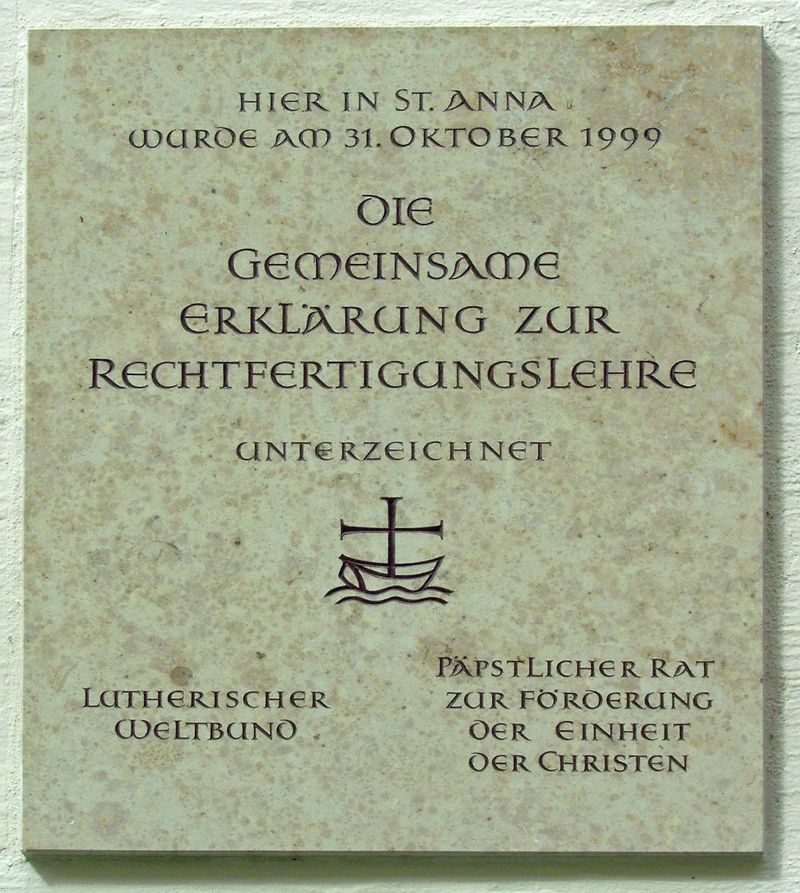
Catholics should begin discussions with Protestants with the unequivocal assertion that salvation is by grace alone, through faith in Christ alone, who calls and equips us to good works—the formula confessed jointly by Catholics and Lutherans in §15 of the 1999 Joint Declaration on the Doctrine of Justification. In a future article, I will discuss this issue in greater detail, as there are significant theological differences regarding the salvation process. Nevertheless, works-based salvation—as Protestants understand the term—does not properly articulate Vatican teachings, and so it is good to dispense with this understanding right off the bat.
Catholics can also point to the 1999 Catholic/Lutheran Joint Declaration on the Doctrine of Justification. The fact that Catholics and Lutherans were able to issue a joint statement regarding the doctrine that prompted the Reformation in the first place demonstrates the misunderstandings about Catholicism that Protestants—particularly evangelicals—harbor.
The mutual distrust that has for so long characterized dialogue between Protestants and Catholics must end. I hope that through these series of articles, I can provide some insight into Protestant culture for those Catholics seeking to engage with their Protestant friends.
Frequently Asked Questions
Do Catholics believe in works-based salvation?
No. The Catholic Church teaches that initial justification is pure gift and cannot be earned (CCC §2010). Works performed in grace then truly cooperate with God’s saving action and, by grace, merit growth in holiness and final perseverance (CCC §§2008–2011). The 1999 Joint Declaration on the Doctrine of Justification between the Catholic Church (signed by the Pontifical Council for Promoting Christian Unity) and the Lutheran World Federation captures the shared confession in §15: “Together we confess: By grace alone, in faith in Christ’s saving work and not because of any merit on our part, we are accepted by God and receive the Holy Spirit, who renews our hearts while equipping and calling us to good works.”
What was the 1999 Joint Declaration on the Doctrine of Justification?
It was a formal joint statement between the Catholic Church (signed by the Pontifical Council for Promoting Christian Unity) and the Lutheran World Federation that articulated a differentiated consensus on the basic truths of the doctrine of justification—the central theological dispute that triggered the Reformation (JDDJ §40). Both bodies affirmed a shared understanding of justification by grace through faith while acknowledging continuing differences in articulation. The World Methodist Council joined the declaration in 2006, the Anglican Communion welcomed association in 2016 (ACC-16, Lusaka), and the World Communion of Reformed Churches signed in 2017.
Why do Catholics and Protestants seem to talk past each other?
Because they often use the same vocabulary differently. Words like “tradition,” “works,” “merit,” and “salvation” carry different connotations in Catholic and Protestant theological frameworks. Effective dialogue requires translating across these semantic differences rather than assuming agreement (or disagreement) where none exists.
What do Catholics and Protestants share in common?
Both confess the divinity of Christ, the Trinity, the inspiration of Scripture, the bodily resurrection, the ecumenical creeds (Apostles’, Nicene), and salvation through Christ alone. (The Athanasian Creed is shared by Lutherans and Anglicans but is not in regular use across most Reformed, Baptist, evangelical, Pentecostal, or non-denominational traditions.) They share the canon of the New Testament and the bulk of the Old Testament, though Catholics include the deuterocanonical books that most Protestants treat as apocrypha.
How should a Catholic begin a conversation with a Protestant about faith?
Start with shared ground: Jesus Christ as the unique mediator of salvation. From there, distinguish between popular Protestant misunderstandings of Catholic teaching (e.g., “Catholics worship Mary,” “Catholics earn their salvation”) and the actual doctrinal differences (e.g., the role of Tradition, the sacraments, ecclesiology). Refer to the Catechism of the Catholic Church for accurate Catholic positions rather than relying on caricature.
Is Christian unity between Catholics and Protestants possible?
Movement toward unity is the explicit goal of both Catholic ecumenism (per Vatican II’s Unitatis Redintegratio) and many Protestant denominations. Visible institutional reunification remains a long way off, but mutual recognition of shared faith—and growing convergence on doctrines like justification—has made the relationship far less adversarial than it was even a generation ago.
Are all Protestants the same?
No. “Protestant” covers a wide range of traditions—Lutheran, Reformed, Anglican, Methodist, Baptist, Pentecostal, evangelical, mainline—that disagree among themselves on sacraments, ecclesiology, predestination, and worship. Effective Catholic-Protestant dialogue starts by knowing to which Protestant tradition the person you’re speaking with belongs. A confessional Lutheran’s concerns will differ from a Pentecostal’s, which will differ from a Reformed Baptist’s. (See Calvinism and Catholicism Compared for one prominent variant; the Orthodox vs. Catholic vs. Protestant comparison gives a wider three-way framing.)
Why did the Reformation happen in the first place?
The Reformation was triggered by genuine abuses in the late medieval Western Church—indulgence sales, clerical corruption, the entanglement of papal authority with German political conflicts—and by theological disagreement over the nature of justification, Scripture, and ecclesial authority. Many of the political circumstances that fueled the Reformation no longer exist, even as some theological disagreements continue. (Did Christianity go wrong for 1,500 years? addresses the historical-theological premise behind that argument in more detail.)

Garrett Ham
Garrett Ham is an attorney, military veteran, and holds a Master of Divinity from Yale Divinity School. He writes from Northwest Arkansas on theology, law, and service.
Related Posts
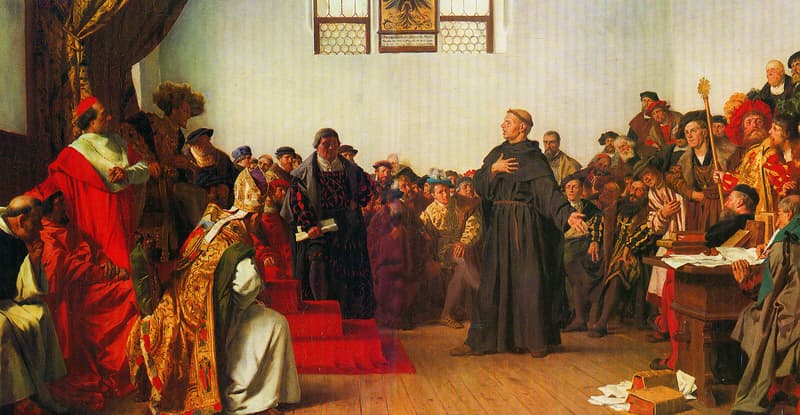
Did Christianity Go Wrong for 1,500 Years? A Catholic Reply
A Catholic convert defends and steelmans the claim that Protestantism's deepest assumption is that Christianity went wrong for 1,500 years before Luther.
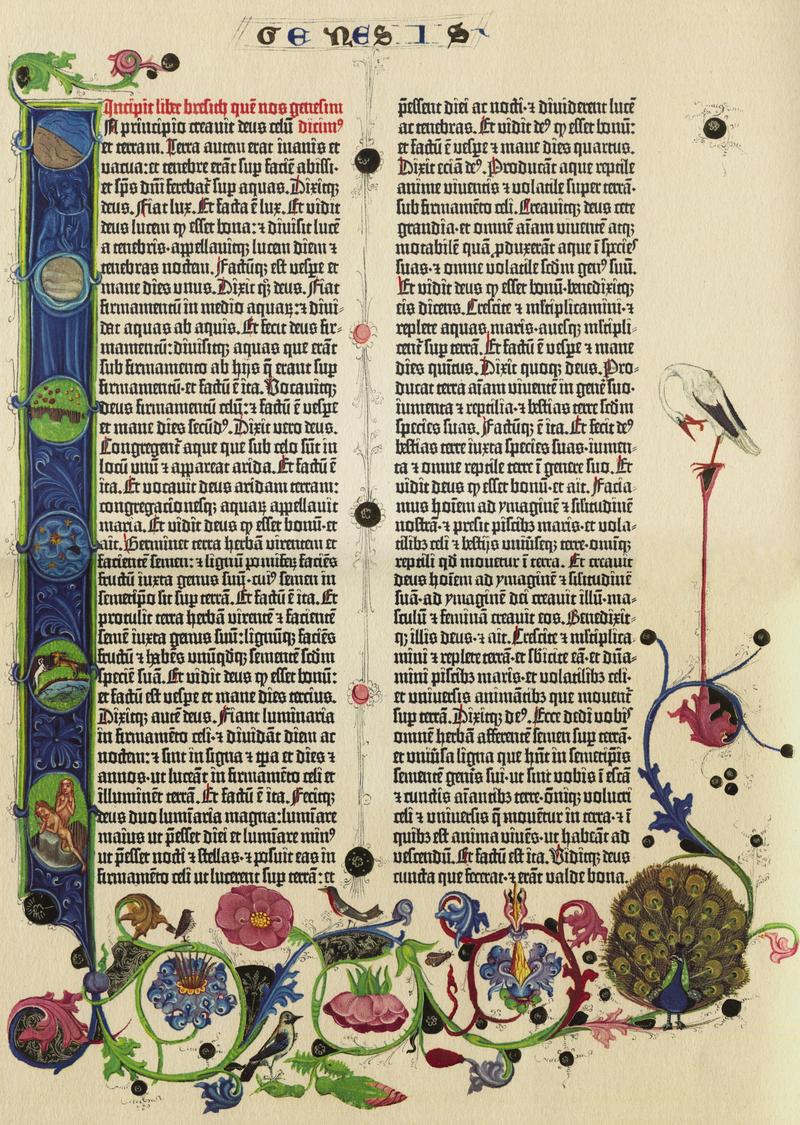
Sola Scriptura and the Journey Toward Catholicism
Sola scriptura is logically self-defeating: affirming Scripture alone requires authority outside Scripture. The insight that started my Catholic journey.
Catholic-Protestant Relations and the Catechism
In this post, I take a look at Catholic-Protestant relations in light of the Catholic Church’s organization of her own Catechism.
Stay Informed
Get new writing on faith, law, and service delivered to your inbox.
No spam. Unsubscribe anytime.